
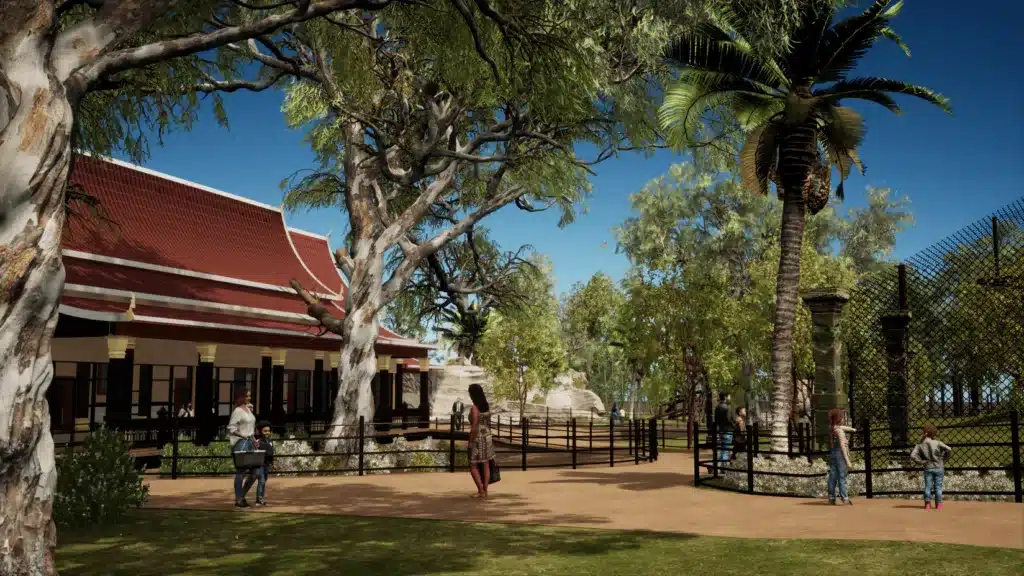
Kasser Family Lotus Pavilion
Green Building
The Kasser Family Lotus Pavilion serves as both a gathering space for conservation education and a living example of sustainable building design.
Conservation at Reid Park Zoo
The Pavilion provides an ideal setting for Conservation Connection lectures featuring conservationists from around the world, local environmental organizations, and community partners. Through its green building features, the Pavilion demonstrates how thoughtful design can conserve resources, improve human health, and support wildlife conservation.
Water Conservation
Every Drop Counts
The Kasser Family Lotus Pavilion was designed to conserve one of our most precious resources – water.
- Ultra-low flow plumbing and use of non-potable water reduces water use by 40%.
- Smart faucets use aerators to limit flow to 0.5 gallons per minute
- High efficiency toilets use 1.28 gpf of reclaimed water from Tuson’s extensive system.
- Reclaimed water reduces demand for drinking water supplies.
How does this help wildlife? Especially in the Sonoran Desert, every drop matters. Conserving water helps protect rivers, wetlands, and other habitats that wildlife depend on to survive. Using water wisely leaves more available for plants, animals, and people – and saves money!
What can you do?
- Install faucet aerators and water-efficient fixtures at home.
- Collect rainwater or use reclaimed water where available.
- Turn off the tap while brushing your teeth or washing dishes.

Energy Efficiency
Smart Energy for a Healthier Planet
The Kasser Family Lotus Pavilion uses innovative design and technology to operate 27% more efficiently than a standard building.
- Smart Solar Placement – Solar panels on the nearby Tropical Discovery Center generate renewable energy and help offset the Pavilion’s power use.
- Variable Refrigerant Volume (VRV) System – Advanced heating and cooling technology delivers only the energy needed, reducing waste.
- Energy Recovery Ventilation – Energy from outgoing air is captured and used to help condition incoming fresh air, lowering heating and cooling demands (and costs!).
How does this help wildlife? Using less energy reduces greenhouse gas emissions that contribute to air pollution and climate change. A more stable habitat helps protect habitats, food sources, and migration patterns that wildlife depend on around the world.
What can you do?
- Switch to dimmable LED lighting, and Energy Star certified appliances.
- Dim or switch off lights and electronics when not needed.
- Put outdoor lighting on timers and aim lighting down to avoid wasting light into the night sky.
- Set your thermostat a few degrees higher in summer and lower in winter
- Reduce direct heat gain through your windows with exterior shades or trees.
- Consider renewable energy options, such as rooftop solar, if available to you.
Saving energy at home can help protect wildlife and wild places everywhere, especially in a place as hot and dry as the Sonoran Desert!

Green Building Choices
Healthy Air, Healthy Planet
The Kasser Family Lotus Pavilion is designed to support a healthy indoor environment for guests, staff, and wildlife.
- Advanced ventilation – Medical-grade MERV13 air filters capture microscopic airborne particles while providing 30% more fresh outdoor air than standard building codes require.
- Healthy building materials – Every paint, coating, sealant, and adhesive used in the Pavilion is certified low-VOC (volatile organic compounds), reducing harmful emissions and improving indoor air quality.
How does this help wildlife? Choosing products with fewer harmful chemicals helps create healthier spaces for people while reducing pollutants that can enter the air, water, and environment. Thoughtful building choices support healthier ecosystems for wildlife and communities alike.
What can you do?
- Change your HVAC filters regularly to maintain good indoor air quality
- Choose low-VOC paints and building materials for home projects
- Use environmentally-friendly cleaning products whenever possible
Small choices can help create healthier homes, healthier communities, and a healthier planet.

Learn more about how Reid Park Zoo is protecting wild animals and wild places around the world.
